Laura Ingalls Wilder, born on February 7, 1867 – February 10, 1957, was an American writer, most notably the author of the Little House series of children's novels based on her childhood in a pioneer family. Her daughter, Rose, encouraged her to write and helped her to edit and publish the novels.
A popular 1974–84 TV series loosely based on the Little House books starred Melissa Gilbert as Laura.
It is her 148th birthday today and Google has included a doodle of her book.
According to this link:
Laura Ingalls Wilder's autobiography, 'Pioneer Girl' details her life in the country, but the picture is less than perfect. With accounts of domestic abuse, messy love triangles, and even a drunk man who lit himself on fire, Wilder's time on the prairie seems to match her name more than the stories we saw in her books.
Wilder and her daughter previously tried publishing the autobiography in the early 1930s, but failed. After the author's passing in 1957, the original draft was saved at the Laura Ingalls Wilder Historic Home and Museum in Mansfield, Missouri. Last November, the South Dakota State Historical Society was finally able to publish the tell-all book.
CLICK HERE for more.
This link gives other details about 'Pioneer Girl'.
I am so happy that of the ten, I have read and still have in my collection - five of the mentioned titles.
CLICK HERE to check it out.
Do share which are the ones you have read or intend to read. Thanks! Have a great day!
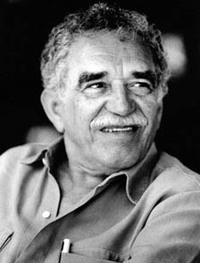
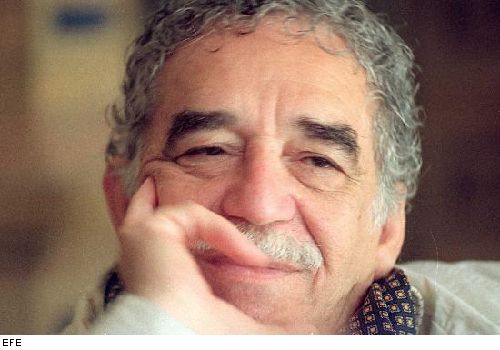
BBC news about his death
Times of India: Gabriel Garcia Marquez - Only the Bible sold more copies than his book
The Independent: He was considered the most popular Spanish-language writer since Miguel de Cervantes in the 17th century The Independent has slides on his life.
Here's Michael Roth's review of “Beyond the University: Why Liberal Education Matters” by Mark Edmunson as featured in NYT. Thanks to Angela who shared this link.
Excerpt:
When young people starting their college careers ask me what they should look for when they get to campus, I tell them: find out who the great teachers are. It doesn’t matter much what the subject is. Find a real teacher, and you may open yourself to transformation — to discovering who you might become. This can be the great gift of a liberal education.
Yes, I sometimes get puzzled looks. Or eye rolls.
If I meet any students heading to the University of Virginia, I will tell them to seek out Mark Edmundson, an English professor and the author of a new collection of essays called “Why Teach?” For Mr. Edmundson, teaching is a calling, an urgent endeavor in which the lives — he says the souls — of students are at stake.
Mr. Edmundson loves to teach, but he hates the conditions under which much teaching takes place today, even at an elite university like Virginia. These conditions — the consumer mentality of students and their families, the efforts of administrators to provide a full spa experience and the rush of faculty to escape from the classroom into esoteric research — make real teachers an endangered species in the academic ecosystem. In this context, Mr. Edmundson reminds us of the power strong teachers have to make students rethink who they are and who they might become. This is what a real education is all about.
Mr. Edmundson made this discovery himself just before graduating from high school. In his working-class family, college was not something taken for granted. When he told his father that he probably “should be prelaw,” his old man warned him not to waste his life studying something he thought he was supposed to be interested in. Unless he was sure about reincarnation, his father thundered, he had better make the most out of this opportunity to pursue subjects that were meaningful to him. Mr. Edmundson found his inspiration in Malcolm X, and in Emerson, Blake, Dickinson and Freud.
According to “Why Teach?,” inspiration is in short supply these days on campus. In the book’s first section, Mr. Edmundson describes the growth since the mid-1990s of a more commercial, profit-oriented university culture. Like many other contemporary commentators, he sees a confluence of forces in higher education leading to greater conformity and consumerism at the expense of inquiry, inspiration and challenge. Mr. Edmundson’s critique is both personal and idealistic, drawing on his deep belief in the democratic mission of liberal education and on his practical experience as a teacher.
He knows the studies showing that students spend less time than ever on their classwork, and he writes of an implicit pact between undergraduates and professors in which teachers give high grades and thin assignments, and students reward them with positive evaluations. After all, given all the other amenities available through the university, the idea that “the courses you take should be the primary objective of going to college is tacitly considered absurd.”
After describing this unhappy shift, Mr. Edmundson’s remaining essays are devoted to “fellow students” and “fellow teachers.” He’s hard on both groups, but underneath the curmudgeonly rhetoric he is desperate to remind them of why real learning and teaching aren’t so much luxuries as necessities.
MORE HERE.
The Metamorphosis of Prime Intellect is a 1994 novella by Roger Williams, a computer programmer living in New Orleans. It deals with the ramifications of a powerful, superintelligent supercomputer that discovers a method of rewriting the "BIOS" of reality while studying a little known quirk of quantum physics discovered during the prototyping of its own specialised processors, ultimately heralding a technological singularity.
.jpg)
After remaining unpublished for years, the novel was published online in 2002, hosted by Kuro5hin; Williams later published a print edition via print-on-demand publisher Lulu. One reviewer called the novel "a well-written and very creative, if flawed, piece of work" and ranked it as one of the more important works of fiction to deal with the idea of a technological singularity.
CLICK HERE for more.
To read that book, PLEASE CLICK HERE.
Recently, The Actors' Studio held a successful reading of the book 'Ladder in the Water' by Feroz Dawson at The Actors Studio @ Lot 10 which saw the likes of Dato' Faridah Merican (author's mother), Joe Hasham OAM, and Ida Nerina among the readers. This evening, the same event will be held in Penang at Gallery 2, penangpac, Straits Quay @ 8 p.m. The book is published by The Actors Studio Sdn Bhd (Malaysia).

According to Mr. Ooi Kee How, Theatre Manager of penangpac:
Feroz Dawson's stories feature Malaysians bonding in their carefree besotted youth, arriving at the cusp of adult responsibilities and maturity to be confronted with weightier matters like death, marriage, politics.
'Fireworks' is about complex responses to the loss of a friend in a road-accident; the good dying young may be fine in a rebel song lyric, but the reality of a coffin is a different thing altogether. The juvenile vandal expressing political dissidence in 'A Drop of Silver' grows into the unmoved protagonist in 'No One Has Claimed Responsibility' who listens to a political rant dictating spiritual purity and thinks of food. Enduring relationships show signs of strain and fissure in 'Ladder in the Water' while a new one is formalised in 'The Licence'.
A generation grows up together and then moves on, away, takes different paths, and if that generation is lucky there will be a writer like Feroz Dawson to record their emotional starts and stops and stutters, as in these stories.
Dr Tom is actually the principal of Enhance Education, Straits Quay. Dr Craig-Cameron has extensive leadership and management experience in the fields of international relations, international education and English language teaching. He has served as Director of the British Council in Malaysia and in Pakistan, and as Counsellor for Educational and Cultural Affairs in the British Embassy in China: in all those operations teaching English and managing British Examinations were major businesses.
He also was Education Attaché to the British Embassy in Washington DC, USA, and Science Programme Manager for the British Council in China and in Saudi Arabia. Within the British Council in the UK he was Director of UK Partnerships responsible for all levels and types of education from universities through colleges and language schools to primary schools. He chaired the Management Boards for the UK Educational Counselling Service and for Accreditation UK* - a special partnership with English Language schools throughout the UK to quality assure and accredit language schools and ensure high standards of English language teaching and professional ethics.
If you are free, please attend this reading. It will be a very meaningful evening. Come and discover why...See you there!

Early years
Lou Salomé was born in St. Petersburg to an army general and his wife. Salomé was their only daughter; she had five brothers. Although she would later be attacked by the Nazis as a "Finnish Jewess," her parents were actually of French Huguenot and Northern German descent.
Seeking an education when she was seventeen Salomé persuaded the Dutch preacher Hendrik Gillot, twenty-five years her senior, to teach her theology, philosophy, world religions, and French and German literature. Gillot became so smitten with Salomé that he planned to divorce his wife and marry her. Salomé and her mother fled to Zurich, so she could acquire a university education. The journey was also intended to be beneficial for Salomé's physical health; she was coughing up blood at this time.
Nietzsche and later life
Salomé's mother took her to Rome, Italy when she was 21. At a literary salon in the city, Salomé became acquainted with Paul Rée, an author and compulsive gambler with whom she proposed living in an academic commune. After two months, the two became partners. On 13 May 1882, Rée's friend Friedrich Nietzsche joined the duo. Salomé would later (1894) write a study, Friedrich Nietzsche in seinen Werken, of Nietzsche's personality and philosophy.[3] The three travelled with Salomé's mother through Italy and considered where they would set up their "Winterplan" commune. Arriving in Leipzig, Germany in October, Salomé and Rée separated from Nietzsche after a falling-out between Nietzsche and Salomé, in which Salomé believed that Nietzsche was desperately in love with her. In 1884 Salomé became acquainted with Helene von Druskowitz, the second woman to receive a philosophy doctorate in Zurich.
A fictional account of Salomé's relationship with Nietzsche is described in Irvin Yalom's novel, When Nietzsche Wept. A biography in Swedish on Lou Salomé, which also covers her relationship with Paul Rée, Rainer Maria Rilke, Friedrich Nietzsche and Sigmund Freud was edited in 2008 on Mita bokförlag by the Swedish author Mirjam Tapper. The title of the book is "Den blonda besten hos Nietzsche - Lou Salomé".
Marriage and relationships
Salomé and Rée moved to Berlin and lived together until a few years before her celibate marriage to linguistics scholar Friedrich Carl Andreas. Despite her opposition to marriage and her open relationships with other men, Salomé and Andreas remained married from 1887 until his death in 1930. The distress caused by Salomé's co-habitation with Andreas caused the morose Rée to fade from Salomé's life despite her assurances. Throughout her married life, she engaged in affairs or/and correspondence with the German journalist Georg Lebedour, the German poet Rainer Maria Rilke, on whom she wrote an analytical memoir,the psychoanalysts Sigmund Freud and Viktor Tausk, among others. Accounts of many of these are given in her volume Lebensrückblick.
Her relationship with Rilke was particularly close. Salomé was fifteen years his senior. They met when he was 21, were lovers for several years and correspondents until Rilke's death; it was Salome who began calling him Rainer rather than René. She taught him Russian, in order to read Tolstoy (whom he would later meet) and Pushkin. She also introduced him to patrons and other people in the arts, remaining his advisor, confidante and muse throughout his adult life.
READ MORE HERE.
A few days ago, this site hosted an excerpt from Aaron James book called “Assholes: A Theory” . AARON JAMES holds a PhD from Harvard and is associate professor of philosophy at the University of California, Irvine. He is the author of Fairness in Practice: A Social Contract for a Global Economy, and was awarded the Burkhardt Fellowship from the American Council of Learned Societies, spending the 2009–10 academic year at the Center for Advanced Study in the Behavioral Sciences at Stanford University. He’s an avid surfer (the experience of which has directly inspired this book) . . . and he’s not an asshole.
According to Amazon.com which sells the book here:
In the spirit of the mega-selling On Bullshit, philosopher Aaron James presents a theory of the asshole that is both intellectually provocative and existentially necessary.
What does it mean for someone to be an asshole? The answer is not obvious, despite the fact that we are often personally stuck dealing with people for whom there is no better name. Try as we might to avoid them, assholes are found everywhere—at work, at home, on the road, and in the public sphere. Encountering one causes great difficulty and personal strain, especially because we often cannot understand why exactly someone should be acting like that.
Asshole management begins with asshole understanding. Much as Machiavelli illuminated political strategy for princes, this book finally gives us the concepts to think or say why assholes disturb us so, and explains why such people seem part of the human social condition, especially in an age of raging narcissism and unbridled capitalism. These concepts are also practically useful, as understanding the asshole we are stuck with helps us think constructively about how to handle problems he (and they are mostly all men) presents. We get a better sense of when the asshole is best resisted, and when he is best ignored—a better sense of what is, and what is not, worth fighting for.
Some of the editorial reviews on Aaron James' book that have been featured in Amazon include:
Advance Praise for Assholes: A Theory:
“Aaron James provides us with a delightful philosophical romp through the world of assholes. I was especially tickled by his analysis of different types: smug assholes, royal assholes, the presidential asshole, corporate assholes, the reckless assholes, to name a few.”
—Robert I. Sutton, Stanford professor and author of the New York Times bestsellers The No Asshole Rule and Good Boss, Bad Boss
“Aaron James explores a very rude term that many now find unavoidable in the description of an alarming human type. His witty and accessible study of the personal and social problems the asshole creates draws on his lucid and brilliant accounts of the best in contemporary moral and political philosophy. James’s analysis of asshole capitalism is a tour de force of philosophically astute political analysis and criticism. This is a book that should appeal equally to the general reader and the philosophical specialist.”
—Marshall Cohen, founding editor of Philosophy and Public Affairs and university professor emeritus, University of Southern California
I hope I have convinced you to CLICK HERE to enjoy the excerpt from “Assholes: A Theory” by Aaron James. That post currently has more than 200 comments!!!
Happy reading and have a great day!!!!
STRUCTURE and revolution are rightly up front in the title of Thomas Kuhn's The Structure of Scientific Revolutions. He was convinced that not only are there scientific revolutions but also that they have a structure. He laid out this structure with great care: normal science (routine scientific work), with its specific accompanying paradigm and a dedication to solving puzzles; followed by serious anomalies produced by research, which lead to a crisis; and finally resolution of that crisis by the creation of a new paradigm.
Puzzle-solving makes us think of crossword puzzles, jigsaws, sudoku - pleasant ways to keep busy when one is not up to useful work. A lot of scientific readers were a bit shocked, then had to admit that this is how it is in much of their daily work. Kuhn wrote: "The most striking feature... is how little they aim to produce major novelties, conceptual or phenomenal." Nowadays, many scientists have great respect for his account of normal science.
Kuhn single-handedly changed the currency of the word "paradigm", so a reader now attaches very different connotations to the word than were available in 1962. As Kuhn stated in his postscript to the book: "The paradigm... is the central element of what I now take to be the most novel and least understood aspect of this book." On the same page he suggested "exemplar" as a substitute. In another essay, he admitted he had "lost control of the word". In later life he abandoned it. But we, the readers of Structure 50 years later, can, I hope, restore it to prominence.
Normal science, then, is characterised by a paradigm, which legitimises the puzzles and problems on which the community works. All is well until the methods legitimised by that paradigm cannot cope with the anomalies that emerge; a crisis results and persists until a new achievement redirects research and serves as a new paradigm. This is a paradigm shift.
By way of illustration, there are moving quotations in Structure from Wolfgang Pauli, a few months before Heisenberg's paper on matrix mechanics showed the way to a new quantum theory, and a few months after. In the former, Pauli feels physics is falling apart and wishes he were in another trade; a few months later, the way ahead is clear. Many had the same feeling: at the height of the crisis the community was falling apart as its paradigm was under challenge.
Obviously, Kuhn's structure is too neat. History is not like that. But it was precisely Kuhn's instinct as a physicist that led him to find a simple and insightful structure. It was a picture of science the general reader could pick up. It also had the merit of being to some extent testable. Historians of science could see the extent to which momentous changes in their fields did conform to Kuhn's structure. Unfortunately, it was also abused by sceptical intellectuals who called the idea of truth into question. Kuhn had no such intention. He was a fact lover and a truth seeker.
So much for structure. As for revolutions, we think first of revolution in political terms. Everything is overthrown; a new world order begins. The first thinker to extend this notion to the sciences may have been Immanuel Kant. In the preface to the second edition of The Critique of Pure Reason, Kant speaks of two revolutionary events. One was the transition in mathematical practice in which techniques familiar in Babylonia and Egypt were transformed in Greece to proofs derived from postulates. The second was the emergence of the experimental method and the laboratory.
At the time Kuhn was writing, scientific revolution of the 17th century was much in vogue: Francis Bacon was its prophet, Galileo its lighthouse, and Newton its sun. But Kuhn was not talking about the scientific revolution. That was quite a different kind of event from the revolutions whose structure Kuhn postulated. Indeed, shortly before writing Structure, he proposed a "second scientific revolution", which took place during the early 19th century when new fields were mathematicised. Heat, light, electricity, and magnetism acquired their own paradigms: suddenly, a whole mass of unsorted phenomena began to make sense. But neither this second revolution nor the first one exhibited the "structure" Kuhn had in mind.
CLICK HERE to read the rest of the
This post is about is the Top 100 Best Novels as selected by various websites. I have added a reaction/ comment about my personal experience with those I have read. It is interesting how each site assesses the books differently and there are many books which are in all three lists.
I have used the following key:
*read
**read and like
*** read and love
^ have not read
?gave up for one reason or another
According to the book The Top Ten: Writers Pick Their Favorite Books by J Peder Zane:
TOP TEN WORKS OF THE 20TH CENTURY
***Lolita by Vladimir Nabokov
***The Great Gatsby by F. Scott Fitzgerald
^In Search of Lost Time by Marcel Proust
?Ulysses by James Joyce
^Dubliners* by James Joyce
***One Hundred Years of Solitude by Gabriel Garcia Marquez
^The Sound and the Fury by William Faulkner
***To The Lighthouse by Virginia Woolf
^The complete stories of Flannery O’Connor
^Pale Fire by Vladimir Nabokov
TOP TEN WORKS OF THE 19th CENTURY
***Anna Karenina* by Leo Tolstoy
***Madame Bovary* by Gustave Flaubert
***War and Peace by Leo Tolstoy
***The Adventures of Huckleberry Finn by Mark Twain
***The stories of Anton Chekhov
***Middlemarch* by George Eliot
*Moby-Dick by Herman Melville
***Great Expectations* by Charles Dickens
***Crime and Punishment by Fyodor Dostoevsky
***Emma by Jane Austen
TOP TEN AUTHORS BY NUMBER OF BOOKS SELECTED
William Shakespeare — 11
*never read any of his booksWilliam Faulkner — 6
Henry James — 6
Jane Austen — 5
Charles Dickens — 5
Fyodor Dostoevsky — 5
Ernest Hemingway — 5
Franz Kafka — 5
(tie) James Joyce, Thomas Mann, Vladimir Nabokov, Mark Twain, Virginia Woolf — 4
TOP TEN AUTHORS BY POINTS EARNED
Leo Tolstoy — 327
William Shakespeare — 293
James Joyce — 194
Vladimir Nabokov — 190
Fyodor Dostoevsky — 177
William Faulkner — 173
Charles Dickens — 168
Anton Chekhov — 165
Gustave Flaubert — 163
Jane Austen — 161
Here's a list by The Best 100 lists.
*read
**read and like
*** read and love
^ have not read
?gave up for one reason or another
***To Kill a Mockingbird by Harper Lee
***1984 by George Orwell
***Pride and Prejudice by Jane Austen
***The Lord of the Rings by J.R.R. Tolkien
***The Catcher in the Rye by J.D. Salinger
***The Great Gatsby by F. Scott Fitzgerald
***Crime and Punishment by Fyodor Dostoevsky
***Catch-22 by Joseph Heller
***Animal Farm by George Orwell
***Lolita by Vladimir Nabokov
***Jane Eyre by Charlotte Bronte
^The Brothers Karamazov by Fyodor Dostoevsky
***Anna Karenina by Leo Tolstoy
***War and Peace by Leo Tolstoy
***Wuthering Heights by Emily Bronte
***The Count of Monte Cristo by Alexandre Dumas
***Brave New World by Aldous Huxley
***The Grapes of Wrath by John Steinbeck
***Lord of the Flies by William Golding
?Ulysses by James Joyce
***Great Expectations by Charles Dickens
***A Tale of Two Cities by Charles Dickens
***Gone with the Wind by Margaret Mitchell
***Les Miserables by Victor Hugo
***Slaughterhouse-Five by Kurt Vonnegut
***East of Eden by John Steinbeck
***One Hundred Years of Solitude by Gabriel Garcia Marquez
^Harry Potter Series by J.K. Rowling - I am NOT a Harry Potter fan.
***The Adventures of Huckleberry Finn by Mark Twain
***The Hobbit by J.R.R. Tolkien
***Don Quixote by Miguel de Cervantes
**Atlas Shrugged by Ayn Rand
***Of Mice and Men by John Steinbeck
**The Fountainhead by Ayn Rand
***A Clockwork Orange by Anthony Burgess
***The Kite Runner by Khaled Hosseini
***The Chronicles of Narnia by C.S. Lewis
***The Picture of Dorian Gray by Oscar Wilde
***The Hitchhiker's Guide to the Galaxy by Douglas Adams
***Frankenstein by Mary Shelley
***Fahrenheit 451 by Ray Bradbury
^The Sound and the Fury by William Faulkner
***One Flew Over the Cuckoo's Nest by Ken Kesey
*Moby Dick by Herman Melville
^Ender's Game by Orson Scott Card
***The Stranger by Albert Camus
**Heart of Darkness by Joseph Conrad
***A Portrait of the Artist as a Young Man by James Joyce
^The Sun Also Rises by Ernest Hemingway
***Watership Down by Richard Adams
^His Dark Materials by Phillip Pullman
*The Time Traveler's Wife by Audrey Niffenegger
^On the Road by Jack Kerouac
***Dracula by Bram Stoker
^The Stand by Stephen King
*The Da Vinci Code by Dan Brown
***The Old Man and the Sea by Ernest Hemingway
^The Road by Cormac McCarthy
*Dune by Frank Herbert
***Little Women by Louisa May Alcott
***Madame Bovary by Gustave Flaubert
***Tess of the D'Urbervilles by Thomas Hardy
***Invisible Man by Ralph Ellison
***Life of Pi by Yann Martel
***Memoirs of a Geisha by Arthur Golden
***Love in the Time of Cholera by Gabriel Garcia Marquez
*David Copperfield by Charles Dickens
?A Confederacy of Dunces by John Kennedy Toole
***A Farewell to Arms by Ernest Hemingway
***Middlemarch by George Eliot
***For Whom the Bell Tolls by Ernest Hemingway
***Remembrance of Things Past by Marcel Proust
***Rebecca by Daphne du Maurier
***The Unbearable Lightness of Being by Milan Kundera
?Fight Club by Chuck Palahniuk
?Absalom, Absalom! by William Faulkner
?The Idiot by Fyodor Dostoevsky
***Persuasion by Jane Austen
***Of Human Bondage by W. Somerset Maugham
*The Handmaid's Tale by Margaret Atwood
***To the Lighthouse by Virginia Woolf
***The Name of the Rose by Umberto Eco
**A Prayer for Owen Meany by John Irving
?As I Lay Dying by William Faulkner
?The Trial by Franz Kafka
***The Three Musketeers by Alexandre Dumas
^The Master and Margarita by Mikhail Bulgakov
^Blood Meridian by Cormac McCarthy
*The Alchemist by Paulo Coelho
***Anne of Green Gables by L.M. Montgomery
***The Bell Jar by Sylvia Plath
***Emma by Jane Austen
***A Thousand Splendid Suns by Khaled Hosseini
***Siddharta by Hermann Hesse
*The Twilight Saga by Stephenie Meyer
***Atonement by Ian McEwan
***Beloved by Toni Morrison
**The Poisonwood Bible by Barbara Kingsolver
^Cat's Cradle by Kurt Vonnegut
***The Scarlet Letter by Nathaniel Hawthorne
• This list of the 100 best books of all time was prepared by Norwegian Book Clubs. It is also listed in Wikipedia and The Guardian.
My reaction:
*read
**read and like
*** read and love
^ have not read
?gave up for one reason or another
***1984 by George Orwell, England, (1903-1950)
***A Doll's House by Henrik Ibsen, Norway (1828-1906)
^A Sentimental Education by Gustave Flaubert, France, (1821-1880)
^Absalom, Absalom! by William Faulkner, United States, (1897-1962)
***The Adventures of Huckleberry Finn by Mark Twain, United States, (1835-1910)
^The Aeneid by Virgil, Italy, (70-19 BC)
***Anna Karenina by Leo Tolstoy, Russia, (1828-1910)
http://www.thebest100lists.com/best100novels/Beloved by Toni Morrison, United States, (b. 1931)
^Berlin Alexanderplatz by Alfred Doblin, Germany, (1878-1957)
^Blindness by Jose Saramago, Portugal, (1922-2010)
^The Book of Disquiet by Fernando Pessoa, Portugal, (1888-1935)
*The Book of Job, Israel. (600-400 BC)
^The Brothers Karamazov by Fyodor M Dostoyevsky, Russia, (1821-1881)
^Buddenbrooks by Thomas Mann, Germany, (1875-1955)
?Canterbury Tales by Geoffrey Chaucer, England, (1340-1400)
^The Castle by Franz Kafka, Bohemia, (1883-1924)
^Children of Gebelawi by Naguib Mahfouz, Egypt, (b. 1911)
^Collected Fictions by Jorge Luis Borges, Argentina, (1899-1986)
^Complete Poems by Giacomo Leopardi, Italy, (1798-1837)
^The Complete Stories by Franz Kafka, Bohemia, (1883-1924)
?The Complete Tales by Edgar Allan Poe, United States, (1809-1849)
^Confessions of Zeno by Italo Svevo, Italy, (1861-1928)
***Crime and Punishment by Fyodor M Dostoyevsky, Russia, (1821-1881)
^Dead Souls by Nikolai Gogol, Russia, (1809-1852)
^The Death of Ivan Ilyich and Other Stories by Leo Tolstoy, Russia, (1828-1910)
^Decameron by Giovanni Boccaccio, Italy, (1313-1375)
^The Devil to Pay in the Backlands by Joao Guimaraes Rosa, Brazil, (1880-1967)
?Diary of a Madman and Other Stories by Lu Xun, China, (1881-1936)
**The Divine Comedy by Dante Alighieri, Italy, (1265-1321)
***Don Quixote by Miguel de Cervantes Saavedra, Spain, (1547-1616)
^Essays by Michel de Montaigne, France, (1533-1592)
***Fairy Tales and Stories by Hans Christian Andersen, Denmark, (1805-1875)
^Faust by Johann Wolfgang von Goethe, Germany, (1749-1832)
^Gargantua and Pantagruel by Francois Rabelais, France, (1495-1553)
*Gilgamesh Mesopotamia, (c 1800 BC)
?The Golden Notebook by Doris Lessing, England, (b.1919)
***Great Expectations by Charles Dickens, England, (1812-1870)
***Gulliver's Travels by Jonathan Swift, Ireland, (1667-1745)
^Gypsy Ballads by Federico Garcia Lorca, Spain, (1898-1936)
*Hamlet by William Shakespeare, England, (1564-1616)
^History by Elsa Morante, Italy, (1918-1985)
^Hunger by Knut Hamsun, Norway, (1859-1952)
^The Idiot by Fyodor M Dostoyevsky, Russia, (1821-1881)
***The Iliad by Homer, Greece, (c 700 BC)
^Independent People by Halldor K Laxness, Iceland, (1902-1998)
***Invisible Man by Ralph Ellison, United States, (1914-1994)
^Jacques the Fatalist and His Master by Denis Diderot, France, (1713-1784)
^Journey to the End of the Night by Louis-Ferdinand Celine, France, (1894-1961)
**King Lear by William Shakespeare, England, (1564-1616)
^Leaves of Grass by Walt Whitman, United States, (1819-1892)
^The Life and Opinions of Tristram Shandy by Laurence Sterne, Ireland, (1713-1768)
***Lolita by Vladimir Nabokov, Russia/United States, (1899-1977)
***Love in the Time of Cholera by Gabriel Garcia Marquez, Colombia, (b. 1928)
***Madame Bovary by Gustave Flaubert, France, (1821-1880)
^The Magic Mountain by Thomas Mann, Germany, (1875-1955)
?Mahabharata, India, (c 500 BC)
^The Man Without Qualities by Robert Musil, Austria, (1880-1942)
^The Mathnawi by Jalal ad-din Rumi, Afghanistan, (1207-1273)
^Medea by Euripides, Greece, (c 480-406 BC)
^Memoirs of Hadrian by Marguerite Yourcenar, France, (1903-1987)
*Metamorphoses by Ovid, Italy, (c 43 BC)
**Middlemarch by George Eliot, England, (1819-1880)
?Midnight's Children by Salman Rushdie, India/Britain, (b. 1947)
**Moby-Dick by Herman Melville, United States, (1819-1891)
***Mrs. Dalloway by Virginia Woolf, England, (1882-1941)
^Njaals Saga, Iceland, (c 1300)
^Nostromo by Joseph Conrad, England,(1857-1924)
***The Odyssey by Homer, Greece, (c 700 BC)
***Oedipus the King Sophocles, Greece, (496-406 BC)
^Old Goriot by Honore de Balzac, France, (1799-1850)
***The Old Man and the Sea by Ernest Hemingway, United States, (1899-1961)
***One Hundred Years of Solitude by Gabriel Garcia Marquez, Colombia, (b. 1928)
^The Orchard by Sheikh Musharrif ud-din Sadi, Iran, (c 1200-1292)
**Othello by William Shakespeare, England, (1564-1616)
^Pedro Paramo by Juan Rulfo Juan Rulfo, Mexico, (1918-1986)
^Pippi Longstocking by Astrid Lindgren, Sweden, (1907-2002)
^Poems by Paul Celan, Romania/France, (1920-1970)
^The Possessed by Fyodor M Dostoyevsky, Russia, (1821-1881)
***Pride and Prejudice by Jane Austen, England, (1775-1817)
^The Ramayana by Valmiki, India, (c 300 BC)
*The Recognition of Sakuntala by Kalidasa, India, (c. 400)
^The Red and the Black by Stendhal, France, (1783-1842)
***Remembrance of Things Past by Marcel Proust, France, (1871-1922)
^Season of Migration to the North by Tayeb Salih, Sudan, (b. 1929)
***Selected Stories by Anton P Chekhov, Russia, (1860-1904)
***Sons and Lovers by DH Lawrence, England, (1885-1930)
^The Sound and the Fury by William Faulkner, United States, (1897-1962)
^The Sound of the Mountain by Yasunari Kawabata, Japan, (1899-1972)
***The Stranger by Albert Camus, France, (1913-1960)
^The Tale of Genji by Shikibu Murasaki, Japan, (c 1000)
***Things Fall Apart by Chinua Achebe, Nigeria, (b. 1930)
***Thousand and One Nights, India/Iran/Iraq/Egypt, (700-1500)
^The Tin Drum by Gunter Grass, Germany, (b.1927)
***To the Lighthouse by Virginia Woolf, England, (1882-1941)
^The Trial by Franz Kafka, Bohemia, (1883-1924)
^Trilogy: Molloy, Malone Dies, The Unnamable by Samuel Beckett, Ireland, (1906-1989)
?Ulysses by James Joyce, Ireland, (1882-1941)
***War and Peace by Leo Tolstoy, Russia, (1828-1910)
***Wuthering Heights by Emily Brontë, England, (1818-1848)
^Zorba the Greek by Nikos Kazantzakis, Greece, (1883-1957)
The following is the best 100 books prepared by Modern Library.
1. "Ulysses," James Joyce
*Gave up halfway but will try again. I could not understand or accept the fact that Joyce wrote such a thick book based on one day in the life of the protagonists. Paul Lewis described it as a long account of a single day in the lives of a group of Dubliners becomes a metaphor for the human condition and the author experiments with language almost to the point of unintelligibility -
2. "The Great Gatsby," F. Scott Fitzgerald
*One of my favourite books. I have read it three times and watched the movie starring Robert Redford and Mia Farrow more than 20 times!!! *coughs* Off-track comment : I am a die-hard fan of Robert Redford, Harrison Ford, Hugh Jackman, Johnny Depp, Jake Gyllenhaal
3. "A Portrait of the Artist as a Young Man," James Joyce
*I first read this book in 1977 and laboured over it in an attempt to understand Joyce's stream of consciousness technique. It was only twenty years later that I really appreciated the book when I read it for the fourth time.
4. "Lolita," Vladimir Nabokov
*Regular blog readers would know I have blogged at least four times about this book. Definitely another must read!!!
5. "Brave New World," Aldous Huxley
*Unbelievably far ahead of his time when he wrote this book in 1931!!! A futuristic novel that is not my cup of tea.
6. "The Sound and the Fury," William Faulkner
Nil
7. "Catch-22," Joseph Heller
*Another must read that everyone should have in their collection.
8. "Darkness at Noon," Arthur Koestler
Nil
9. "Sons and Lovers," D. H. Lawrence
*I red this book after I studied "The Rainbow" for my sixth form literature class and must say Lawrence is a gifted writer. This is surely Lawrence's best work and a masterpiece to be treasured. My seniors in sixth form were lucky as their text was this novel!
10. "The Grapes of Wrath," John Steinbeck
*Definitely another must read!!!! I read it in 1972 when my father bought a set of hard cover classics that had in the collection "Lord Jim", "Rebecca", "Of Human Bondage", "Gone with the Wind" etc. It was an expensive set and almost four decades down the road, the books are still in mint condition with the exception of its slightly yellowed pages.
11. "Under the Volcano," Malcolm Lowry
Nil
12. "The Way of All Flesh," Samuel Butler
Nil
13. "1984," George Orwell
*A book that everyone must read!
14. "I, Claudius," Robert Graves
Nil
15. "To the Lighthouse," Virginia Woolf
Ahhhhhhhhh - my favourite of all her books!!!!
16. "An American Tragedy," Theodore Dreiser
Nil
17. "The Heart Is a Lonely Hunter," Carson McCullers
Nil
18. "Slaughterhouse Five," Kurt Vonnegut
*It took me three years to finally get my hands on this book. Tough read but well worth the effort!
19. "Invisible Man," Ralph Ellison
*Read this when I was in school and I believe it is the first book that made me question who I am and aspects of communism even at a young age.
20. "Native Son," Richard Wright
Nil
21. "Henderson the Rain King," Saul Bellow
Nil
22. "Appointment in Samarra," John O' Hara
Nil
23. "U.S.A." (trilogy), John Dos Passos
Nil
24. "Winesburg, Ohio," Sherwood Anderson
Nil
25. "A Passage to India," E. M. Forster
*Slow and draggy but the contrasts used so skilfully by Forster makes it worthwhile ploughing through the thick book.
26. "The Wings of the Dove," Henry James
Nil
27. "The Ambassadors," Henry James
Nil
28. "Tender Is the Night," F. Scott Fitzgerald
*Anything by Fitzgerald is a firm favourite but this one is too melancholic :-( because it was his last book written during the saddest moments of his life.The title does not show the harsh painful bleakness of the story or his experiences but once you read it...sighs...
29. "The Studs Lonigan Trilogy," James T. Farrell
Nil
30. "The Good Soldier," Ford Madox Ford
Nil
31. "Animal Farm," George Orwell
Need I say more? Everyone MUST read this one!
32. "The Golden Bowl," Henry James
Nil
33. "Sister Carrie," Theodore Dreiser
Nil
34. "A Handful of Dust," Evelyn Waugh
Nil
35. "As I Lay Dying," William Faulkner
Nil
36. "All the King's Men," Robert Penn Warren
Nil
37. "The Bridge of San Luis Rey," Thornton Wilder
Nil
38. "Howards End," E. M. Forster
Yesssss! A Must Read!!!
39. "Go Tell It on the Mountain," James Baldwin
Nil
40. "The Heart of the Matter," Graham Greene
*I have this book and a couple of others by Greene but all - not read yet.
41. "Lord of the Flies," William Golding
*Another masterpiece to be savored and appreciated!
42. "Deliverance," James Dickey
Nil
43. "A Dance to the Music of Time" (series), Anthony Powell
Nil
44. "Point Counter Point," Aldous Huxley
Nil
45. "The Sun Also Rises," Ernest Hemingway
Nil
46. "The Secret Agent," Joseph Conrad
*Unforgettable!
47. "Nostromo," Joseph Conrad
Nil
48. "The Rainbow," D. H. Lawrence
*I studied this book for my sixth form literature class. Tough read but fortunately, I had a fantastic teacher who brought to life the themes, characters and significance of his writings and how each were linked to what he had in mind.
49. "Women in Love," D. H. Lawrence
*The sequel to "The Rainbow" which provides a glimpse of English society in the pre-WWI days.
50. "Tropic of Cancer," Henry Miller
Nil
51. "The Naked and the Dead," Norman Mailer
Nil
52. "Portnoy's Complaint," Philip Roth
Nil
53. "Pale Fire," Vladimir Nabokov
Nil
54. "Light in August," William Faulkner
Nil
55. "On the Road," Jack Kerouac
Nil
56. "The Maltese Falcon," Dashiell Hammett
Nil
57. "Parade's End," Ford Madox Ford
Nil
58. "The Age of Innocence," Edith Wharton
*The only Edith Wharton book I could finish apart from "Ethan Frome"....She uses her typical recipe of social tragedy in terms of plot.
59. "Zuleika Dobson," Max Beerbohm
Nil
60. "The Moviegoer," Walker Percy
Nil
61. "Death Comes to the Archbishop," Willa Cather
Nil
62. "From Here to Eternity," James Jones
Nil
63. "The Wapshot Chronicles," John Cheever
Nil
64. "The Catcher in the Rye," J. D. Salinger
*LOVE IT. Cannot believe it was banned!!!
65. "A Clockwork Orange," Anthony Burgess
*Love this and the movie!!
66. "Of Human Bondage," W. Somerset Maugham
*Have read this about four times and I love love love this book and many of his other writings!
67. "Heart of Darkness," Joseph Conrad
*One that everyone must read before they reach adulthood. It is three stories about the three stages of life. Short, meaningful and impactful.
68. "Main Street," Sinclair Lewis
Nil
69. "The House of Mirth," Edith Wharton
*I don't like Edith Wharton's books with the exception of "The Age of Innocence". I forced myself to finish her Ethan Frome. *gulps* Too depressing!
70. "The Alexandria Quartet," Lawrence Durrell
Nil
71. "A High Wind in Jamaica," Richard Hughes
Nil
72. "A House for Ms. Biswas," V. S. Naipaul
Nil
73. "The Day of the Locust," Nathaniel West
Nil
74. "A Farewell to Arms," Ernest Hemingway
*Yet another favourite of mine from the 1970's. Planning to read it again soon.
75. "Scoop," Evelyn Waugh
Nil
76. "The Prime of Miss Jean Brodie," Muriel Spark
Nil
77. "Finnegans Wake," James Joyce
Nil but I have the book
78. "Kim," Rudyard Kipling
Love it!!
79. "A Room With a View," E. M. Forster
*A book which has to be read very slowly to fully appreciate its magnificence.
80. "Brideshead Revisited," Evelyn Waugh
*Read it but did not like it.
81. "The Adventures of Augie March," Saul Bellow
Nil
82. "Angle of Repose," Wallace Stegner
Nil
83. "A Bend in the River," V. S. Naipaul
Nil
84. "The Death of the Heart," Elizabeth Bowen
Nil
85. "Lord Jim," Joseph Conrad
*I read this when I was 12 in a bid to drown myself in words to assuage the pain and grief I suffered when my mom passed away. I should read it again.
86. "Ragtime," E. L. Doctorow
Nil
87. "The Old Wives' Tale," Arnold Bennett
Nil
88. "The Call of the Wild," Jack London
*Another favourite from my younger days.
89. "Loving," Henry Green
Nil
90. "Midnight's Children," Salman Rushdie
*There are only two books I could not really understand - "Ulysses" and this book but I daresay this one is more readable and easier to understand than "Ulysses" I made myself read it a few times but never went beyond page 60. By the time I reached page 30, I had forgotten what had happened in the earlier parts. :-(
91. "Tobacco Road," Erskine Caldwell
Nil
92. "Ironweed," William Kennedy
Nil
93. "The Magus," John Fowles
Nil
94. "Wide Sargasso Sea," Jean Rhys
Nil
95. "Under the Net," Iris Murdoch
Nil
96. "Sophie's Choice," William Styron
LOVE THIS ONE!!! Read it in mid 1980s.
97. "The Sheltering Sky," Paul Bowles
Nil
98. "The Postman Always Rings Twice," James M. Cain
I prefer the movie to the book...
99. "The Ginger Man," J. P. Donleavy
Nil
100. "The Magnificent Ambersons," Booth Tarkington
Nil
Happy Reading!!!! Please leave a comment to share your thoughts/response/recommendations about your favourite books. Thanks!
Unbeknownst to many, books may not be in the limelight or celebrated on a grand scale such as in commemoration of wars or campaigns of any sort but in their quiet and subtle ways, have triggered social change in many parts of the world. "Common Sense" by Thomas Paine stirred racial sentiments in the pre-American revolution period whilst Harriet Beecher Stowe's "Uncle Tom's Cabin" awakened anti-slavery feelings that was the pre-cursor to the American Civil War. Well, "Silent Spring" by Rachel Carson's Silent Spring is another one of those impactful books that set the scene for the environmental movement. Known only as a natural history writer, Carson's book eventually led to the banning of DDT in the US ten years down the road.

When 'Silent Spring' was released on September 27th, 1962, it exposed the hazards of the pesticide DDT - particularly on birds. Very bravely, Rachel Carson argued that the uncontrolled and questionable use of DDT not only killed animals and birds but man as well. She also questioned how people could just simply accept the claims of the industry without studying its deadly and far-reaching effects.
Wikipedia tells us that Silent Spring has been featured in many lists of the best nonfiction books of the twentieth century. In the Modern Library List of Best 20th-Century Nonfiction it was at #5, and it was at No.78 in the conservative National Review. Most recently, Silent Spring was named one of the 25 greatest science books of all time by the editors of Discover Magazine.
Carson, a renowned nature author and a former marine biologist with the U.S. Fish and Wildlife Service, was uniquely equipped to create so startling and inflammatory a book. A native of rural Pennsylvania, she had grown up with an enthusiasm for nature matched only by her love of writing and poetry.
Hailing from Pennsylvania, Rachel Carson, formerly a marine biologist with the U.S. Fish and Wildlife Services, she loved nature, writing and poetry. Carson wrote other bestsellers such as " Under the Sea Wind", "The Sea Around Us"), and "The Edge of The Sea" glorified and poetically explained the complexity and inter-connectivity of the web of life.
I am writing about this because almost three decades ago in my first job in an environmental organization, I had to read extensively about DDT and its horrible effects hence Carson's book has always had a place in my heart. The most unforgettable chapter in this book is "A Fable for Tomorrow" where Carson skilfully expounds on a fictitious (?) American town where all forms of life forms from marine life to the birds of the air to the four/two-legged creatures that walk this earth (including man) had been "silenced" once and for all by the insidious and devastating effects of DDT.
According to Wikipedia:
DDT (dichlorodiphenyltrichloroethane) is an organochlorine insecticide which is a white, crystalline solid, tasteless, and almost odorless. Technical DDT has been formulated in almost every conceivable form including solutions in xylene or petroleum distillates, emulsifiable concentrates, water-wettable powders, granules, aerosols, smoke candles, and charges for vaporisers and lotions.
First synthesized in 1874, DDT's insecticidal properties were not discovered until 1939, and it was used with great success in the second half of World War II to control malaria and typhus among civilians and troops. The Swiss chemist Paul Hermann Müller was awarded the Nobel Prize in Physiology or Medicine in 1948 "for his discovery of the high efficiency of DDT as a contact poison against several arthropods." After the war, DDT was made available for use as an agricultural insecticide, and soon its production and use skyrocketed.
In 1962, Silent Spring by American biologist Rachel Carson was published. The book catalogued the environmental impacts of the indiscriminate spraying of DDT in the US and questioned the logic of releasing large amounts of chemicals into the environment without fully understanding their effects on ecology or human health. The book suggested that DDT and other pesticides may cause cancer and that their agricultural use was a threat to wildlife, particularly birds. Its publication was one of the signature events in the birth of the environmental movement, and resulted in a large public outcry that eventually led to DDT being banned in the US in 1972. DDT was subsequently banned for agricultural use worldwide under the Stockholm Convention, but its limited use in disease vector control continues to this day and remains controversial. CLICK HERE FOR MORE.
Last week,The New York Times featured an excellent article by Eliza Griswold on How ‘Silent Spring’ Ignited the Environmental Movement where she wrote:
On June 4, 1963, less than a year after the controversial environmental classic “Silent Spring” was published, its author, Rachel Carson, testified before a Senate subcommittee on pesticides. She was 56 and dying of breast cancer. She told almost no one. She’d already survived a radical mastectomy. Her pelvis was so riddled with fractures that it was nearly impossible for her to walk to her seat at the wooden table before the Congressional panel. To hide her baldness, she wore a dark brown wig.
“Every once in a while in the history of mankind, a book has appeared which has substantially altered the course of history,” Senator Ernest Gruening, a Democrat from Alaska, told Carson at the time.
“Silent Spring” was published 50 years ago this month. Though she did not set out to do so, Carson influenced the environmental movement as no one had since the 19th century’s most celebrated hermit, Henry David Thoreau, wrote about Walden Pond. “Silent Spring” presents a view of nature compromised by synthetic pesticides, especially DDT. Once these pesticides entered the biosphere, Carson argued, they not only killed bugs but also made their way up the food chain to threaten bird and fish populations and could eventually sicken children. Much of the data and case studies that Carson drew from weren’t new; the scientific community had known of these findings for some time, but Carson was the first to put them all together for the general public and to draw stark and far-reaching conclusions. In doing so, Carson, the citizen-scientist, spawned a revolution. PLEASE CLICK HERE to read the rest of this fantastic article.
Please read the entry on DDT listed in Wikipedia as it explains in great detail the deadly effects of DDT.
Click here if you want to see the shocking list of the many chemicals used (including amount used) in the Vietnam War.
Today, we remember Rachel Carson and her 'Silent Spring'. We may not be facing the devastating effects of DDT but there are other threats that we face such as GMF foods, dangerous chemicals in certain medicines and all kinds of questionable practices. May there be more brave and enlightened/informed people who can blaze the trail for a better society, better life. I salute and remember Rachel Carson - for all the passion and love she displayed in her life for the environment and the betterment of mankind. May she rest in peace always.
Please CLICK HERE if you want to visit Rachel Carson's official website.
There was a beautiful and fragrant violet who lived placidly amongst her friends, and swayed happily amidst the other flowers in a solitary garden.

One morning, as her crown was embellished with beads of dew, she lifted her head and looked about; she saw a tall and handsome rose standing proudly and reaching high into space, like a burning torch upon an emerald lamp.
The violet opened her blue lips and said, "What an unfortunate am I among these flowers, and how humble is the position I occupy in their presence! Nature has fashioned me to be short and poor.... I live very close to the earth and I cannot raise my head toward the blue sky, or turn my face to the sun, as the roses do."
And the rose heard her neighbor's words; she laughed and commented, "How strange is your talk! You are fortunate, and yet you cannot understand your fortune. Nature has bestowed upon you fragrance and beauty which she did not grant to any other... Cast aside your thoughts and be contended, and remember that he who humbles himself will be exalted, and he who exalts himself will be crushed."
The violet answered, "You are consoling me because you have that I craved.... You seek to embitter me with the meaning that you are great.... How painful is the preaching of the fortunate to the heart of the miserable! And how severe is the strong when he stands as advisor among the weak!"
And Nature heard the conversation of the violet and the rose; she approached and said, "What has happened to you, my daughter violet? You have been humble and sweet in all your deeds and words. Has greed entered your heart and numbed your senses?" In a pleading voice, the violet answered her, saying, "Oh great and merciful mother, full of love and sympathy, I beg you, with all my heart and soul, to grant my request and allow me to be a rose for one day."
And Nature responded, "you know not what you are seeking; you are unaware of the concealed disaster behind your blind ambition. If you were a rose you would be sorry, and repentance would avail you but naught." The violet insisted, "Change me into a tall rose, for I wish to lift my head high with pride; and regardless of my fate, it will be my own doing." Nature yielded, saying, "Oh ignorant and rebellious violet, I will grant your request. But if calamity befalls you, your complaint must be to yourself."
And Nature stretched forth her mysterious and magic finger and touched the roots of the violet, who immediately turned into a tall rose; rising above all other flowers in the garden.
At eventide the sky became thick with black clouds, and the raging elements disturbed the silence of existence with thunder, and commenced to attack the garden, sending forth a great rain and strong winds. The tempest tore the branches and uprooted the plants and broke the stems of the tall flowers, sparing only the little ones who grew close to the friendly earth. That solitary garden suffered greatly from the belligerent skies, and when the storm calmed and the sky cleared, all the flowers were laid waste and none of them had escaped the wrath of Nature except the clan of small violets, hiding by the wall of the garden.
Having lifted her head and viewed the tragedy of the flowers and trees, one of the violet maidens smiled happily and called to here companions, saying, "See what the tempest has done to the haughty flowers!" Another violet said, "We are small, and live close to the earth, but we are safe from the wrath of the skies." And a third one added, "Because we are poor in height the tempest is unable to subdue us."
At that moment the queen of violets saw by her side the converted violet, hurled to earth by the storm and distorted upon the wet grass like a limp soldier in a battle field. The queen of the violets lifted her head and called to her family, saying, "Look, my daughters, and meditate upon that which Greed has done to the violet who became a proud rose for one hour. Let the memory of this scene be a reminder of your good fortune."
And the dying rose moved and gathered the remnants of her strength, and quietly said, "You are contended and meek dullards; I have never feared the tempest. Yesterday I, too, was satisfied and contented with Life, but Contentment has acted as a barrier between my existence and the tempest of Life, confining me to a sickly and sluggish peace and tranquility of mind. I could have lived the same life you are living now by clinging with fear to the earth.... I could have waited for winter to shroud me with snow and deliver me to Death, who will surely claim all violets.... I am happy now because I have probed outside my little world into the mystery of the Universe.... something which you have not yet done. I could have overlooked Greed, whose nature is higher than mine, but as I hearkened to the silence of the night, I heard the heavenly world talking to this earthly world, saying, 'Ambition beyond existence is the essential purpose of our being.' At that moment my spirit revolted and my heart longed for a position higher than my limited existence. I realized that the abyss cannot hear the song of the stars, and at that moment I commenced fighting against my smallness and craving for that which did not belong to me, until my rebelliousness turned into a great power, and my longing into a creating will.... Nature, who is the great object of our deeper dreams, granted my request and changed me into a rose with her magic fingers."
The rose became silent for a moment, and in a weakening voice, mingled with pride and achievement, she said, "I have lived one hour as a proud rose; I have existed for a time like a queen; I have looked at the Universe from behind the eyes of the rose; I have heard the whisper of the firmament through the ears of the rose and touched the folds of Light's garment with rose petals. Is there any here who can claim such honor?" Having this spoken, she lowered her head, and with a choking voice he gasped, "I shall die now, for my souls has attained its goal. I have finally extended my knowledge to a world beyond the narrow cavern of my birth. This is the design of Life.... This is the secret of Existence." Then the rose quivered, slowly folded her petals, and breathed her last with a heavenly smile upon her lips... a smile of fulfillment of hope and purpose in Life... a smile of victory... a God's smile.
-By Khalil Gibran, Secret of the Heart-
Many use the term 'Machiavellian' policies etc without really understanding Niccolo Machiavelli because they may not have read his book "The Prince".
If you have not read it, you can access the test HERE. Study notes are available HERE.

According to this article:
The Prince (Italian: Il Principe) is a political treatise by the Italian diplomat, historian and political theorist Niccolò Machiavelli. From correspondence a version appears to have been distributed in 1513, using a Latin title, De Principatibus (About Principalities). However, the printed version was not published until 1532, five years after Machiavelli's death. This was done with the permission of the Medici pope Clement VII, but "long before then, in fact since the first appearance of the Prince in manuscript, controversy had swirled about his writings".
Although it was written as if it were a traditional work in the mirrors for princes style, it is generally agreed that it was especially innovative. This is only partly because it was written in the Vernacular (Italian) rather than Latin, a practice which had become increasingly popular since the publication of Dante's Divine Comedy and other works of Renaissance literature.
The Prince is sometimes claimed to be one of the first works of modern philosophy, especially modern political philosophy, in which the effective truth is taken to be more important than any abstract ideal. It was also in direct conflict with the dominant Catholic and scholastic doctrines of the time concerning how to consider politics and ethics.
Although it is relatively short, the treatise is the most remembered of his works and the one most responsible for bringing the word "Machiavellian" into wide usage as a pejorative term. It also helped make "Old Nick" an English term for the devil, and even contributed to the modern negative connotations of the words "politics" and "politician" in western countries.In terms of subject matter it overlaps with the much longer Discourses on Livy, which was written a few years later. In its use of near contemporary Italians as examples of people who perpetrated criminal deeds for politics, another lesser-known work by Machiavelli which The Prince has been compared to is the Life of Castruccio Castracani.
The descriptions within The Prince has the general theme of accepting the aims of princes; such as glory, and indeed survival, can justify the use of immoral means to achieve those ends.
The following is a list of selected Machiavellian quotations taken from his book "The Prince."
There are three kinds of intelligence: one kind understands things for itself, the other appreciates what others can understand, the third understands neither for itself nor through others. This first kind is excellent, the second good, and the third kind useless.
The first method for estimating the intelligence of a ruler is to look at the men he has around him.
A man who is used to acting in one way never changes; he must come to ruin when the times, in changing, no longer are in harmony with his ways.
A man who wishes to profess at all times will come to ruin among so many who are not good.
A prince is also esteemed when he is a true friend and a true enemy.
A prince must not have any other object nor any other thoughtà but war, its institutions, and its discipline; because that is the only art befitting one who commands.
A prudent man should always follow in the path trodden by great men and imitate those who are most excellent, so that if he does not attain to their greatness, at any rate he will get some tinge of it.
A wise prince then...should never be idle in times of peace but should industriously lay up stores of which to avail himself in times of adversity so that when Fortune abandons him he may be prepared to resist her blows.
And although one should not reason about Moses, as he was a mere executor of things that had been ordered for him by God, nonetheless he should be admired if only for that grace which made him deserving of speaking with God.
And in examining their life and deeds it will be seen that they owed nothing to fortune but the opportunity which gave them matter to be shaped into the form that they thought fit; and without that opportunity their powers would have been wasted, and without their powers the opportunity would have come in vain.
And truly it is a very natural and ordinary thing to desire to acquire, and always, when men do it who can, they will be praised or not blamed; but when they cannot, and wish to do it anyway, here lies the error and the blame.
Any man who tries to be good all the time is bound to come to ruin among the great number who are not good. Hence a prince who wants to keep his authority must learn how not to be good, and use that knowledge, or refrain from using it, as necessity requires.
Everyone sees what you appear to be, few experience what you really are.
For it must be noted, that men must either be caressed or else annihilated; they will revenge themselves for small injuries, but cannot do so for great ones; the injury therefore that we do to a man must be such that we need not fear his vengeance.
For on Cardinal Rohan saying to me that the Italians did not understand war, I replied that the French did not understand politics.
For one change always leaves a dovetail into which another will fit.
-Quotations by Niccolo Machiavelli taken from "The Prince"-
Friends and former students who have known me for long are aware of my deep love for the works and philosophy of Albert Camus. CLICK HERE to listen to how his name is pronounced.
According to Wikipedia:
Albert Camus (7 November 1913 – 4 January 1960) was a French pied-noir author, journalist, and philosopher. His views contributed to the rise of the philosophy known as absurdism. He wrote in his essay "The Rebel" that his whole life was devoted to opposing the philosophy of nihilism while still delving deeply into individual freedom. Although often cited as a proponent of existentialism, the philosophy with which Camus was associated during his own lifetime, he rejected this particular label. In an interview in 1945, Camus rejected any ideological associations: "No, I am not an existentialist. Sartre and I are always surprised to see our names linked..."
In 1949, Camus founded the Group for International Liaisons within the Revolutionary Union Movement, which was opposed to some tendencies of the Surrealist movement of André Breton.
Camus was awarded the 1957 Nobel Prize for Literature "for his important literary production, which with clear-sighted earnestness illuminates the problems of the human conscience in our times". He was the second-youngest recipient of the Nobel Prize in Literature, after Rudyard Kipling, and the first African-born writer to receive the award. He is the shortest-lived of any Nobel literature laureate to date, having died in an automobile accident just over two years after receiving the award. CLICK HERE for more.Of all the books he has return, my favourite will always be The Stranger. Even though Camus never considered himself an existentialist; the theme and outlook of the book are often cited as exemplars of existentialism. Some even argue that Camus explores various philosophical schools of thought, including (most prominently and specifically) absurdism, as well as determinism, nihilism, naturalism, and stoicism.
Published in1942, The Stranger is about a man who feels no pain when his mother dies and eventually kills an Arab. It is the rudimentary part of the existentialist and absurd fiction, hailed by contemporaries as a lyrical masterpiece. I have had the privilege of teaching International Baccalaureate students who had to study this book for World Literature. Each time I teach a different student, I never cease to be amazed at how I find new insight in the book. Till today, many academicians are still analyzing Meursault's psychology and philosophy. Despite its simplicity and brevity, there is certainly no other novel like it. It is a paradoxical tale because in its brevity, it says so much. Words are few are yet the volumes of emotion and possibilities to understand those emotions are endless It is almost one enters a different world when reading Camus - where one may despair at Mersault's imperfections and yet wanting to expose his vulnerable side.
If you hate reading and only want to read one short book, please read The Stranger. You will not regret it. I have read it five times and even now, I still get so piqued, fascinated and intrigued as to how Camus could have woven such a masterpiece in its simplicity!!! If you have time, check out one of my favourite posts which I wrote back in April 2011: The Stranger and TBH Inquest.

Number two in the To-Read-List of Albert Camus' books would definitely be The Myth of Sisyphus which some regard as the “bible” of absurdity. Quite unbelievably, the book comprises only 120 pages. Originally published in 1942 in French as Le Mythe de Sisyphe, it was only in 1955 that the English translation by Justin was released.
Most skilfully and philosophically, Camus introduces his philosophy of the absurd whereby he shows how futile it is for man to see meaning, unity, and clarity especially when the unintelligible world seems quite devoid of God and eternal truths or values.
In The Myth of Sisyphus, the question of whether one may commit suicide upon the realization of the absurd. However, Camus declares that revolt is required and he goes on to discuss approaches to the absurd life.and how we can handle the absurdity of life.
Hence, Camus compares the absurdity of man's life with the situation of Sisyphus. The protagonist is a figure of Greek mythology condemned to the same repetitive meaningless task of pushing a boulder up a mountain, only to see it roll down again.
Quite sarcastically, Camus' finishing line for the book is "The struggle itself [...] is enough to fill a man's heart. One must imagine Sisyphus happy."
My perspective to life has changed quite a bit after studying Camus' work. He preaches that the doctrine of the absurd can be discovered in his book despite its thin pages. To Camus, the only true thing in life is that life is absurd and that man's life is full of absurdities. Read it HERE. If you have read it before and don't really understand it, check out Spark Notes on the book HERE.
Here's the summary from Spark Notes:
The central concern of The Myth of Sisyphus
The absurd is a contradiction that cannot be reconciled, and any attempt to reconcile this contradiction is simply an attempt to escape from it: facing the absurd is struggling against it. Camus claims that existentialist philosophers such as Kierkegaard, Chestov, and Jaspers, and phenomenologists such as Husserl, all confront the contradiction of the absurd but then try to escape from it. Existentialists find no meaning or order in existence and then attempt to find some sort of transcendence or meaning in this very meaninglessness.
Living with the absurd, Camus suggests, is a matter of facing this fundamental contradiction and maintaining constant awareness of it. Facing the absurd does not entail suicide, but, on the contrary, allows us to live life to its fullest.
Camus identifies three characteristics of the absurd life: revolt (we must not accept any answer or reconciliation in our struggle), freedom (we are absolutely free to think and behave as we choose), and passion (we must pursue a life of rich and diverse experiences).
Camus gives four examples of the absurd life: the seducer, who pursues the passions of the moment; the actor, who compresses the passions of hundreds of lives into a stage career; the conqueror, or rebel, whose political struggle focuses his energies; and the artist, who creates entire worlds. Absurd art does not try to explain experience, but simply describes it. It presents a certain worldview that deals with particular matters rather than aiming for universal themes.
The book ends with a discussion of the myth of Sisyphus, who, according to the Greek myth, was punished for all eternity to roll a rock up a mountain only to have it roll back down to the bottom when he reaches the top. Camus claims that Sisyphus is the ideal absurd hero and that his punishment is representative of the human condition: Sisyphus must struggle perpetually and without hope of success. So long as he accepts that there is nothing more to life than this absurd struggle, then he can find happiness in it, says Camus.
Camus appends his essay with a discussion of the works of Franz Kafka. He ultimately concludes that Kafka is an existentialist, who, like Kierkegaard, chooses to make a leap of faith rather than accept his absurd condition. However, Camus admires Kafka for expressing humanity's absurd predicament so perfectly. Source: HERE
Originally, I wanted to write on ten of Camus' books. Then I cut it down to five. And now, it is 11.37pm. Definitely past my bedtime (11.30pm) and my brain has shut down already. I wish I could write more but the alphabets seem to be doing their own strange jig on the laptop screen so I have to bid you Good night.
To be continued....
The Bold Knight, the Apples of Youth, and the Water of Life
According to Wikipedia, RUSSIAN FAIRY TALES is a collection of Russian fairy tales, collected by Alexander Afanasyev and published by him between 1855 and 1863. His work was explicitly modeled after the Brothers Grimm's work, Grimm's Fairy Tales.
I love fairy tales and many do not know that the original versions of many such tales , especially by the Brothers Grimm are not simple tales. I also love Russian writers especially those from the Golden Age such as Leo Tolstoy (War and Peace), Fyodor Dostoyevsky (Crime and Punishment, The Idiot and The Brothers Karamazov) and Anton Chekhov (Three Sisters and The Cherry Orchard). Twentieth century Russian writers I admire are Vladimir Nabokov (Lolita, Pnin and The Real Life of Sebastian Knight) and Aleksandr Solzhenitsyn (The Gulag Archipelago).
This evening, I wish to share two of my favourite Russian fairy tales: The Bold Knight, the Apples of Youth, and the Water of Life written by Alexander Afanasyev in Narodnye Russkie Skazki, 1862 and Go I Know Not Whither and Fetch I Know Not What written by Alexander Afanasyevin Narodnye Russkie Skazki. These tales are delightful and it is most unfortunate that due to the current state in the standard of English, children cannot enjoy such beautifully crafted tales. Happy reading!
_________________________________
An old king whose sight was failing heard of a garden with apples that would make a man grow young, and water that would restore his sight. His oldest son set out; he came to a pillar that said on one road, his horse would be full and he hungry, on the second, he would lose his life, and on the third, he would be full and his horse hungry. He took the third. He came to a house where a widow made him welcome and offered to let him spend the night with her daughter Dunia. He accepted, and Dunia made him fall into the cellar.
His second son set out and met the same fate. Finally the youngest son set out, over his father's reluctance. When he received the same offer from the widow, he said he must go to the bathhouse first; Dunia led him to it, and he beat her until she revealed his brothers. He freed them, but they were ashamed to go home.
He rode on and found a pretty maiden weaving. She could not direct him to the garden but sent him on to her second sister. She bade him leave his horse with her and go on a two-winged horse to their third sister. The third sister gave him a four-winged horse and told him to ensure that it leapt the wall in a single bound, or it make bells ring and wake the witch. He tried to obey her, but the horse's hoof just grazed the wall. The sound was too soft to wake the witch. In the morning, she chased after him on her six-winged horse, but only caught him when he was near his own land and did not fear her. She cursed him, saying nothing would save him from his brothers.
He found his brothers sleeping and slept by them. They stole his apples and threw him over a cliff. He fell to a dark kingdom. There, a dragon demanded a beautiful maiden every year, and this year the lot had fallen on the princess. The knight said he would save her if the king would promise to do as he asked; the king promised not only that but to marry him to the princess as well. They went to where the dragon was coming and he went to sleep, telling the princess to wake him. The dragon came, she could not wake him and began to weep, and a tear fell on his face, waking him. He cut off the dragon's heads, put them under a rock, and threw its body in the sea.
Another man sneaked up behind him and cut off his head. He threatened to kill the princess if she would not say that he had killed the dragon. The king arranged for the marriage, but the princess went to sea with fishermen. Each time they caught a fish, she had them throw it back, but finally, their nets caught the knight's body and head. She put them back together and used the water of life on them. He comforted her and sent her home, saying he would come and make it right. He came and asked the king whether the alleged dragon slayer could find the dragon's heads. The imposter could not, but the knight could. The knight said he wanted only to go to his own country, not to marry the princess, but she did not want to be parted from him. She knew a spoonbilled bird that could carry them, if it had enough to eat. They went off with a whole ox, but it was not quite enough; the princess cut off part of her thigh to feed it. The bird carried them all the way and commented on the sweetness of the last piece of meat. She showed it what she had done, and it spat the piece back out; the knight used the water of life to restore it.
He went back with his father, used the water of life, and told him what his brothers had done. The brothers were so frightened they jumped in the river. The knight married the princess.
__________________________
A royal hunter shot a bird; wounded, it begged him not to kill it but to take it home, and when it went to sleep, strike its head. He did so, and the bird became a beautiful woman. She proposed that they marry, and they did. After the marriage, she saw how hard he had to hunt, and told him to borrow one or two hundred rubles. He did so, and then bought silks with them. She conjured two spirits and set them to make a marvelous carpet. Then she gave the carpet to her husband and told him to accept whatever price he was given. The merchants did not know how much to pay for it, and finally the king's steward bought it for ten thousand rubles. The king saw it and gave the steward twenty-five thousand for it.
The steward went to the hunter's house to get another, and saw his wife. He fell madly in love with her, and the king saw it. The steward told him why, and the king went himself and saw the hunter's wife. He decided that he should marry her instead and demanded the steward devise a way to be rid of the husband. The steward, with Baba Yaga's advice, had him sent to sea in a rotten ship, with a bad crew, to catch the stag with golden horns in the thrice tenth kingdom. The hunter being told of this, told his wife. She conjured up the stag and had him take it on the ship, sail out for five days and turn back.
The king was enraged with the steward, who again went to Baba Yaga. This time, the steward had the king send him to "go I know not whither and bring back I know not what." The wife's conjured spirits could not help her. She told him to ask for gold from the king and gave him a ball, which if rolled before him would led him where he needed to go, and a handkerchief, with directions to wipe his face with it whenever he washed. He left. The king sent a carriage for his wife. She turned back into a bird and left.
Her husband finally came to a castle. They gave him food and let him rest; then they brought him water to wash. He wiped his face not with their towel but his handkerchief. They recognized it as their sister's. They brought their mother, who also recognized it; she questioned him, and he told his story. She summoned all the beasts and birds to see if they knew how to "go I know not whither and bring back I know not what." Then she went out to sea with him and summoned all the fish. Last of all to arrive, a limping frog knew.
The woman gave him a jug to carry the frog, which could not walk that fast. He did, and the frog directed him to a river, where it told him to get on it, and swelled large enough to carry him across. There, it directed him to listen to two old men who would arrive. He did, and heard them summon "Shmat Razum" to serve them. Then the old men left, and he heard Shmat Razum lament how they treated him. The man asked Shmat Razum to serve him instead, and he agreed.
Shmat Razum carried him back. He stopped at a golden arbor, where he met three merchants. At Shmat Razum's directions, he exchanged his servant for three marvels: they could summon up a garden, a fleet of ships, and an army. But after a day, Shmat Razum returned to the hunter.
In his own country, the hunter had Shmat Razum build a castle. His wife returned to him there. The king saw the castle and marched against him. He summoned the fleet and the army and defeated the king, and was chosen king in his place.
Earlier this evening, I finished reading John Steinbeck's "Of Mice and Men" for the fourth time. I first read it when I was a chubby twelve year old schoolgirl and from then, I devoured as many of Steinbeck's books and for as many times as possible.
Without a doubt, Steinbeck remains my favorite American author together with F. Scott Fitzgerald, Ernest Hemingway, Arthur Miller and Paul Auster. I am just so amazed that each reading has elicited a different response each time. When I read it as a twelve year old in Form 1, I was angry at Lennie for the way in which George had to bail him out so many times. Then in my twenties, I was more enraged with the sub-plots of the story and felt quite frustrated with the corrupting power of women and the impossibility of the American Dream faced by desperately poor Californian wanderers. In my forties, I realize that Steinbeck wanted us to realize the predatory nature of human existence in this simple tale that also embodies idealized male friendship - very rare in modern society. And today, I wondered about the overt and covert motives why Steinbeck wrote this book.
I have read and possess almost all of Steinbeck's books with the exception of the more obscure ones such as "America and Americans", "In Dubious Battle", "The Log from the Sea of Cortez", "Forgotten Village" and "A Russian Journal". My favorites would be "The Grapes of Wrath", "Of Mice and Men", "East of Eden", "The Pearl" and "The Red Pony".
To appreciate the book, we must understand his background. John Steinbeck was born in 1902 in Salinas, California, that became the setting for much of his fiction, including "Of Mice and Men". As a teenager, he spent his summers working as a hired hand on neighboring ranches, where his experiences of rural California and its people impressed him deeply. In 1919, he enrolled at Stanford University, where he studied intermittently for the next six years before finally leaving without having earned a degree. For the next five years, he worked as a reporter and then as caretaker for a Lake Tahoe estate while he completed his first novel, an adventure story called Cup of Gold, published in 1929. He only achieved critical and commercial success six years later when Tortilla Flat was published in 1935.
Steinbeck sets "Of Mice and Men" against the backdrop of Depression-era America. The economic conditions of the time victimized workers like George and Lennie, whose quest for land was thwarted by cruel and powerful forces beyond their control, but whose tragedy was marked, ultimately, by steadfast compassion and love qualities which are so absent in our society today (pardon my cynicism). Just as George and Lennie dream of a better life on their own farm, the Great Plains farmers dreamed of finding a better life in California. The state's mild climate promised a longer growing season and, with soil favorable to a wider range of crops, it offered more opportunities to harvest. Despite these promises, though, very few found it to be the land of opportunity and plenty of which they dreamed. And isn't that the way dreams seem to go sometimes, when we have to wrestle against fate and other circumstances that are way beyond our control?
To be honest, critical opinions of Steinbeck's work have always been mixed. Steinbeck was strongly influenced by his contemporary, Ernest Hemingway stylistically and in his emphasis on manhood and male relationships, which figure heavily in "Of Mice and Men".
Even though Steinbeck was hailed as a great author in the 1930s and '40s, and won the Nobel Prize for literature in 1962, many critics have faulted his works for being superficial, sentimental, and overly moralistic. But I love his writings!!! Though "Of Mice and Men" is regarded by some as his greatest achievement, many critics argue that it suffers from one-dimensional characters and an excessively deterministic plot, which renders the lesson of the novel more important than the people in it. To a certain extent, this is a valid argument but I often question what was his hidden agenda in writing this tale, given the fact that he puts in so much effort in his works and was such a devoted and disciplined writer.
Frankly, "Of Mice and Men" teaches us all a grim lesson about the nature of human existence. Nearly all of the characters, including George, Lennie, Candy, Crooks, and Curley's wife, admit, at one time or another, to having a profound sense of loneliness and isolation. Each desires the comfort of a friend, but will settle for the attentive ear of a stranger. Curley's wife admits to Candy, Crooks, and Lennie that she is unhappily married. Crooks tells Lennie that life is no good without a companion to turn to in times of confusion and need. Very skilfully, Steinbeck renders the characters helpless by their isolation, and yet, even at their weakest, they seek to destroy those who are even weaker than they!!! Perhaps the most powerful example of this cruel tendency is when Crooks criticizes Lennie's dream of the farm and his dependence on George. Having just admitted his own vulnerabilities—he is a black man with a crooked back who longs for companionship—Crooks zeroes in on Lennie's own weaknesses.
In scenes such as this one, Steinbeck records a profound human truth: oppression does not come only from the hands of the strong or the powerful. Crooks seems at his strongest when he has nearly reduced Lennie to tears for fear that something bad has happened to George, just as Curley's wife feels most powerful when she threatens to have Crooks lynched. The novel suggests that the most visible kind of strength, that used to oppress others, is itself born of weakness. How true - not only in the book but around us too!!
In "Of Mice and Men", Candy's dog represents the fate awaiting anyone who has outlived his or her purpose. Once a fine sheepdog, useful on the ranch, Candy's mutt is now debilitated by age. Candy's sentimental attachment to the animal—his plea that Carlson let the dog live for no other reason than that Candy raised it from a puppy—means nothing at all on the ranch. I was very upset at this point of the novel. Although Carlson promises to kill the dog painlessly, his insistence that the old animal must die supports a cruel natural law that the strong will dispose of the weak. Candy accepts his decision much as he loves his dog and more importantly, he internalizes this lesson, for he fears that he himself is nearing an age when he will no longer be useful at the ranch, and therefore no longer welcome. How true of many sectors in society who look down on the elderly!!! This should not be the case at all.
I think the part which I love most because it always moves me to tears is the tragic end of George and Lennie's friendship. This tragic end has such a profound impact that anyone can sense that the friends have, by the end of the novel, lost a dream larger than themselves!! And that is most tragic - to be propelled forward by a dream and then to lose it....*sighs*
The farm on which George and Lennie plan to live—a place that no one ever reaches—has a magnetic quality, as Crooks points out. After hearing a description of only a few sentences, Candy is completely drawn in by its magic. Crooks has witnessed countless men fall under the same silly spell, and still he cannot help but ask Lennie if he can have a patch of garden to hoe there. The men in "Of Mice and Men" desire to come together in a way that would allow them to be like brothers to one another. That is, they want to live with one another and have the best interests of others in mind, to protect each other, and to know that there is someone in the world dedicated to protecting them. Given the harsh, lonely conditions under which these men live, it should come as no surprise that they idealize friendships between men in such a way.
But wait a minute - isn't that too unrealistic?
Ultimately, however, the world is too harsh and predatory a place to sustain such relationships. Lennie and George, who come closest to achieving this ideal of brotherhood, are forced to separate tragically. With this, a rare friendship vanishes, but the rest of the world—represented by Curley and Carlson, who watch George stumble away with grief from his friend's dead body—fails to acknowledge or appreciate it. And isn't it so true in this cruel world in which we live? Some can be great friends to others who don't appreciate them and the giver of love walks away in deep sorrow while the one who rejects love continues to live with a hardened heart....
I wonder if Steinbeck wanted to wake us from our slumber and to make us see more of ourselves in the characters he created in "Of Mice and Men" so that we can live more, love more and judge less...condemn less. What do you think?
If you have not read it, please get your hands on the book or check out the e-book version which is available in cyberspace. In the mean time, I am going back to Orhan Pamuk's "SNOW" - another brilliant tale. Have a lovely evening, dear blog reader and God bless you!


