Barbie dolls, Cabbage-Patch dolls, talking dolls and whatever type of dolls every girl dreams of were most definitely NOT my childhood toys. Instead, I grew up on a staple diet of action figurines, guns, cars and more importantly a variety of comics (which by now are regarded as collectors’ items) and a range of literature which molded my character and perspective of life. Of course I am not saying that I was some child prodigy in reading and writing. Far from it.
Apart from being every mother’s nightmare with my usual dose of temper tantrums and unreasonable demands, I just had an undying passion for books, books and more books. I went through stages in my insatiable hunger for knowledge from kindergarten to the present. Each time, my papa brought home a book or a comic for me, after “Thanks, Papa” would be “When can I get another one?”
Now, as I approach middle age, I cannot help but smile because I am just the same. While many women would go crazy and splurge on designer clothes, watches, shoes and handbags, nothing would please me more than hours and hours spent at BORDERS, Kinokuniya, MPH, Popular and other bookshops.
The million dollar question remains.
Why read at all?
Why is it that we have a generation that balks at reading? Is our society witnessing the slow painful death of reading culture? For baby boomers like me, our main forms of entertainment as children were reading, watching television and playing games such as seven stones, snakes and ladders, badminton, hide and seek etc. For Penangites like me, a real treat in the 1970s would be a trip to the popular Juniors Restaurant, Eden, Tip-top or Top Top restaurants. If I were to make such an offer to a teenager today, they would probably look at me strangely as though I am from a different planet.
Ask any teenager or primary school pupil this question: Have you heard of E.B. White? They would probably say, ‘Nope. Don’t know that singer/actor.” The response would be different if you asked them, “Have you watched Stuart Little?’ A positive response would most likely be the case. Yet, few would know that E.B. White is the author of Stuart Little, Charlotte’s Web, Trumpet of Swans etc.
Now, the worrying fact is that while mass media has a considerable impact on reading, the more exacerbating and disconcerting fact is that electronic communication has a detrimental impact on reading and learning. Please don’t click the close tab right away and dismiss my take on this issue. Do give me a chance to say my piece, thank you.
Let me ask you one simple question.
Compared to the time when you were young, do you find that these days, there is a greater tendency to skim when reading a book, newspaper/magazine? For those of us who do not read as much, we might even feel that our ability to probe, analyze or assess what we read seems to be diminishing merely because we are either in a hurry or we get bored or even, it is far too tiring a mental exercise!
Maryanne Wolf, is a cognitive neuro-scientist and professor at Tuft University whose book “Proust and the Squid: The Story and Science of the Reading Brain”provides fascinating insights on the impact of digital media, especially the Internet, on reading, thinking and the cognitive development of children as a whole. She believes that the reading brain, formed over the past 5,000 years since the acquisition of reading is being endangered - an unforeseen consequence of the transition to a digital age that is affecting every aspect of our lives including the intellectual development of children.
Citing Socrates, Wolf explained that the philosopher found himself at a similar crossroads, when writing emerged as an alternative to oral communication. Socrates was against the acquisition of literacy and the core of his arguments rested on his fears that young people would mistake the absorption and understanding of written information for the cultivation of true knowledge. He believed that the seeming permanence of the printed word would delude the young into thinking they had accessed the heart of knowledge rather than simply decoded it. To Socrates, only the arduous process of probing, analyzing and ultimately internalizing knowledge would enable the young to develop a lifelong approach to thinking that would lead them ultimately to wisdom and virtue.
In the digital world, Socrates’ concerns for the young have new relevance. “How many children today are becoming Socrates’ nightmares, mere decoders of information who have neither the time nor the motivation to think beneath or beyond their googled universes? Will they become so accustomed to immediate access to escalating on-screen information that they will fail to probe beyond the information given to the deeper layers of insight, imagination and knowledge that have led us to this stage of human thought?” she asked.
Personally, having been in the education industry for more than two decades (please stop calculating my age, thank you ;) , I am also deeply concerned with the plight of the reading habit, especially for those who are growing up in this technologically rich society where instead of citing Dickens, Tolstoy, Frost, Atwood, Pamuk, the minds and habits of children (even teens and adults) today are being taken over by PSP, Nintendo, DOTA, Maple Story and so on. As each of us grows, we need to have both the time and motivation to think for ourselves and to develop our thinking skills without being taken over or controlled by electronic communication, in particular, the Internet.
While I cannot deny that the Internet has brought obvious benefits to man, I would hate to witness a scenario where the very intellect who created the digital revolution is being destroyed by it. Of course I am not saying that people today read less because of technology, but I hypothesize that today, people are reading less because of social environmental factors and the Internet. As in other areas of our lives, balance is needed. I assert that children’s exposure to the Internet should be monitored and at the same time, be exposed to traditional sources of information such as books, magazines, newspapers, and comics and so on so that their minds can be trained to think, probe and analyze instead of being numbed into passivity through all those electronic games and applications.
No one can pinpoint when reading began but historical records show that it is as old as known civilizations such as cave paintings, Egyptian artifacts, and hieroglyphics and so on. Indeed, man has gone through not just changes in social structure, economic ideology, religious reformation but reading has gone through its own stages as well from pictographs, ideographs, phonograms and finally alphabets. Suffice to say where we go from here in future generations depends on you and me. Don’t you think so?
Abraham Lincoln Didn't Quit
Probably the greatest example of persistence is Abraham Lincoln. If you want to learn about somebody who didn't quit, look no further.
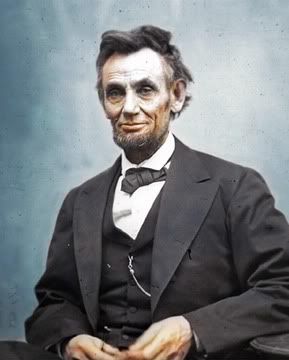
Born into poverty, Lincoln was faced with defeat throughout his life. He lost eight elections, twice failed in business and suffered a nervous breakdown.
He could have quit many times - but he didn't and because he didn't quit, he became one of the greatest presidents in the history of America.
Lincoln was a champion and he never gave up. Here is a sketch of Lincoln's road to the White House:
- 1816 His family was forced out of their home. He had to work to support them.
- 1818 His mother died.
- 1831 Failed in business.
- 1832 Ran for state legislature - lost.
- l832 Also lost his job - wanted to go to law school but couldn't get in.
- 1833 Borrowed some money from a friend to begin a business and by the end of the year he was bankrupt. He spent the next 17 years of his life paying off this debt.
- 1834 Ran for state legislature again - won.
- 1835 Was engaged to be married, sweetheart died and his heart was broken.
- 1836 Had a total nervous breakdown and was in bed for six months.
- 1838 Sought to become speaker of the state legislature - defeated.
- 1840 Sought to become elector - defeated.
- 1843 Ran for Congress - lost.
- 1846 Ran for Congress again - this time he won - went to Washington and did a good job.
- 1848 Ran for re-election to Congress - lost.
- 1849 Sought the job of land officer in his home state - rejected.
- 1854 Ran for Senate of the United States - lost.
- 1856 Sought the Vice-Presidential nomination at his party's national convention - get less than 100 votes.
- 1858 Ran for U.S. Senate again - again he lost.
- 1860 Elected president of the United States.
Dear friend/relative/blog reader/visitor etc.,
While going through my files, I came across this old poem that means a lot to me and spent quite some time as usual looking for suitable pictures that can bring out the beauty of the words and message therein...I hope it touches you the way it touches me, regardless of the many times I have read it...
Have a nice day and a lovely weekend with your loved ones!
-----------------------------------------------------------------------------------------------------
THE FLOWER GIFT
The park bench was deserted as I sat down to read
Beneath the long, straggly branches of an old willow tree.
Disillusioned by life with good reason to frown,
For the world was intent on dragging me down.

And if that weren't enough to ruin my day,
A young boy out of breath approached me, all tired from play.
He stood right before me with his head tilted down,
And said with great excitement, "Look what I found!"
In his hand was a flower, and what a pitiful sight,
With its petals all worn - not enough rain, or too little light.
Wanting him to take his dead flower and go off to play,
I faked a small smile and then shifted away.

But instead of retreating he sat next to my side
And placed the flower to his nose and declared with surprise,
"It sure smells pretty and it's beautiful, too.
That's why I picked it; here, it's for you."

The weed before me was dying or dead.
Not vibrant of colors, orange, yellow or red.
But I knew I must take it, or he might never leave.
So I reached for the flower, and replied, "Just what I need."
But instead of him placing the flower in my hand,
He held it mid-air without reason or plan.
It was then that I noticed for the very first time
That weed-toting boy could not see: he was blind.
I heard my voice quiver, tears shone like the sun
As I thanked him for picking the very best one.
"You're welcome," he smiled, and then ran off to play,
Unaware of the impact he'd had on my day.

I sat there and wondered how he managed to see
An old man with self-pity sitting beneath an old willow tree.
How did he know of my self-indulged plight?
Perhaps from his heart, he'd been blessed with true sight.
Through the eyes of a blind child, at last I could see
The problem was not with the world; the problem was me.
And for all of those times I myself had been blind,
I vowed to see beauty, and appreciate every second that's mine.

And then I held that wilted flower up to my nose
And breathed in the fragrance of a beautiful rose
And smiled as that young boy, another weed in his hand
About to change the life of an unsuspecting old man.

-Author unknown
Years ago, a farmer owned land along the Atlantic seacoast. He constantly advertised for hired hands. Most people were reluctant to work on farms along the Atlantic. They dreaded the awful storms that raged across the Atlantic, wreaking havoc on the
buildings and crops. As the farmer interviewed applicants for the job, he received a steady stream of refusals.
Finally, a short, thin man, well past middle age, approached the farmer. “Are you a good farm hand?” the farmer asked him.”Well, I can sleep when the wind blows,” answered the little man.
Although puzzled by this answer, the farmer, desperate for help, hired him. The little man worked well around the farm, busy from dawn to dusk, and the farmer felt satisfied with the man’s work.
Then one night the wind howled loudly in from offshore. Jumping out of bed, the farmer grabbed a lantern and rushed next door to the hired hand’s sleeping quarters. He shook the little man and yelled, “Get up! A storm is coming! Tie things down before they blow away!”
The little man rolled over in bed and said firmly, “No sir. I told you, I can sleep when the wind blows.”
Enraged by the response, the farmer was tempted to fire him on the spot. Instead, he hurried outside to prepare for the storm. To his amazement, he discovered that all of the haystacks had been covered with tarpaulins. The cows were in the barn, the chickens were in the coops, and the doors were barred. The shutters were tightly secured. Everything was tied down.
Nothing could blow away. The farmer then understood what his hired hand meant, so he returned to his bed to also sleep while the wind blew.
When you’re prepared, spiritually, mentally, and physically, you have nothing to fear. Can you sleep when the wind blows through your life?
The hired hand in the story was able to sleep because he had secured the farm against the storm. We secure ourselves against the storms of life by making the necessary preparations and hanging on to faith in our God(whichever one you believe in). We don’t need to understand, we just need to trust and to have peace in the middle of storms.
-author unknown-
I hope you enjoy your day and you sleep well.